
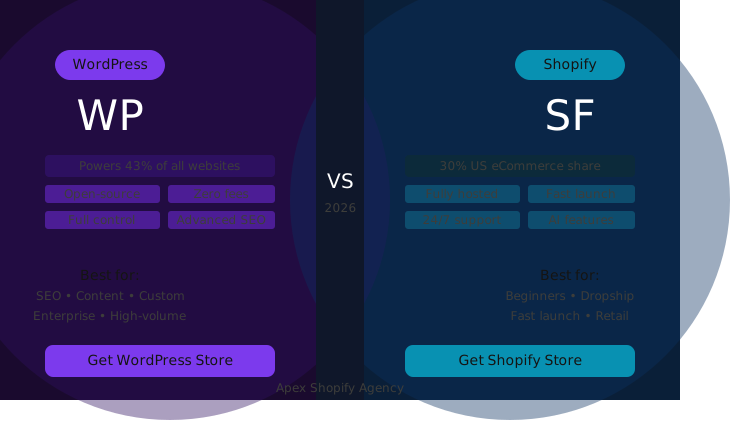
WordPress vs Shopify — which platform is better for your business in 2026? Compare pricing, SEO, features and ease of use. Expert guide by Apex Shopify Agency.
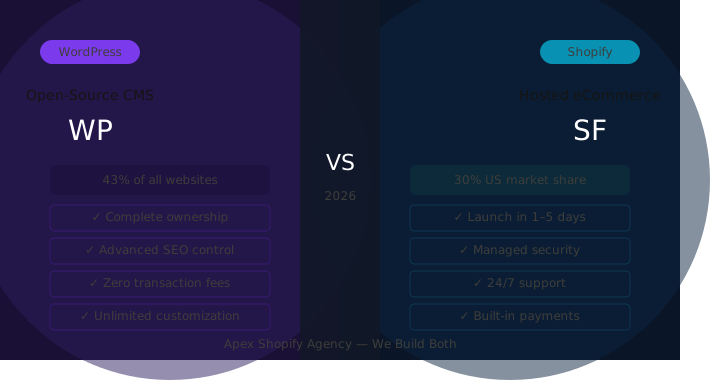
WordPress vs Shopify — The Quick Answer
If you need a fast, simple answer — here it is:
Choose Shopify if you want to launch quickly, avoid technical complexity, and focus 100% on selling. Shopify handles hosting, security, updates, and checkout — all under one roof.
Choose WordPress if you need complete control, advanced SEO capabilities, custom development freedom, and long-term ownership of your platform.
But the real WordPress vs Shopify decision is never that simple — because both platforms can power million-dollar businesses. The right choice depends entirely on your business model, technical resources, budget, and growth goals.
Here is a quick snapshot before we dive deep:
| Shopify | WordPress | |
| Best For | Fast launch, managed store | Content-driven, custom store |
| Setup Time | 1–5 days | 2–4 weeks |
| Technical Skill | Zero required | Low to moderate |
| Monthly Cost | $39–$399 | Variable |
| SEO Control | Standard | Advanced |
| Customization | Limited | Unlimited |
| Transaction Fees | Yes — unless Shopify Payments | No platform fees |
The sections below break down every factor in detail — so by the end of this WordPress vs Shopify guide, you will know exactly which platform is right for your business in 2026.
What is Shopify?
Shopify is a fully hosted eCommerce platform that gives businesses everything they need to sell online — all in one place. Founded in 2006, Shopify today powers over 4.9 million stores globally and holds 30% of the US eCommerce market share.
In the WordPress vs Shopify debate, Shopify represents the “managed simplicity” side — where the platform handles all technical complexity so you can focus purely on growing your business.
How Does Shopify Work?
Shopify operates on a Software-as-a-Service (SaaS) model. You pay a monthly subscription and get:
- Hosting and SSL — included automatically
- Drag-and-drop store builder — no coding required
- Built-in payment processing — Shopify Payments
- App marketplace — 8,000+ apps for extra functionality
- 24/7 customer support — chat and email always available
- Automatic security updates — zero maintenance needed
Everything runs on Shopify’s servers — you never touch hosting, backups, or security patches.
Who is Shopify Best For?
Shopify is the perfect choice for:
- First-time store owners with no technical background
- Entrepreneurs who want to launch within days
- Product-focused businesses that do not rely heavily on blogging
- Dropshippers and print-on-demand sellers
- Businesses that prefer predictable monthly costs
When comparing WordPress vs Shopify, Shopify is simply the fastest path from idea to first sale.
What is WordPress for eCommerce?
WordPress is the world’s most popular open-source content management system — powering 43% of all websites globally. Originally built for blogging, WordPress has evolved into a powerful eCommerce platform when paired with the WooCommerce plugin.
In the WordPress vs Shopify comparison, WordPress represents the “total ownership” side — where you control every aspect of your website, code, database, and business logic.
How Does WordPress Become an eCommerce Platform?
WordPress itself is not a store — it becomes one through WooCommerce, a free open-source plugin that adds complete eCommerce functionality:
- Product management — simple, variable, digital products
- Shopping cart and checkout — fully customizable
- Payment gateways — Stripe, PayPal, WooPayments and more
- Shipping and tax configuration — flexible and regional
- Inventory management — track stock automatically
- Extensions and plugins — thousands of free and premium options
Unlike Shopify, WooCommerce gives you unrestricted access to your store’s code, database, and business logic — with zero platform transaction fees.
Who is WordPress Best For?
WordPress is the ideal choice for:
- Content-driven businesses relying heavily on SEO and blogging
- Businesses needing custom checkout flows and unique functionality
- Developers and agencies building complex eCommerce solutions
- Established brands wanting complete data ownership
- Businesses processing high sales volume — no transaction fees saves significantly
When evaluating WordPress vs Shopify, WordPress consistently wins for businesses that prioritize long-term flexibility over short-term convenience.
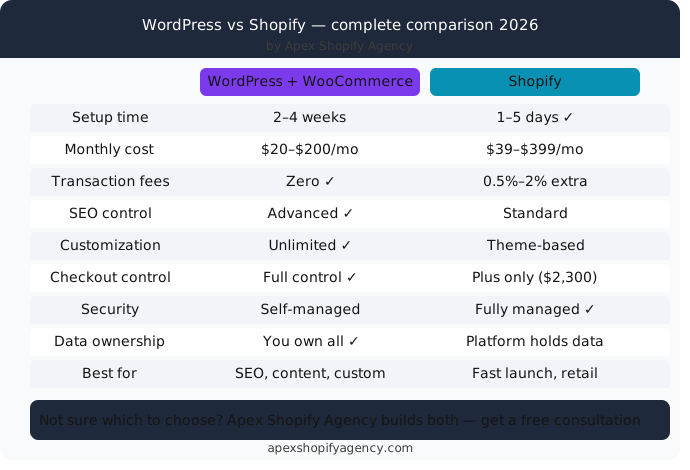
WordPress vs Shopify — Complete Comparison Table
Before diving into each factor in detail, this WordPress vs Shopify comparison table gives you a complete side-by-side overview of both platforms across every major decision point.
| Feature | Shopify | WordPress + WooCommerce |
| Platform Type | Hosted SaaS | Self-hosted Open-Source |
| Setup Time | 1–5 days | 2–4 weeks |
| Technical Skill | Zero required | Low to moderate |
| Monthly Cost | $39–$399/month | Variable — $20–$200/month |
| Transaction Fees | 0.5%–2% third-party | Zero platform fees |
| Hosting | Included | Self-managed |
| Security | Fully managed | User-managed |
| SEO Control | Standard | Advanced |
| Customization | Theme-based | Unlimited code access |
| Checkout Control | Limited — Plus only | Fully customizable |
| Content/Blogging | Basic | Industry-leading |
| App/Plugin Ecosystem | 8,000+ apps | 59,000+ plugins |
| Payment Gateways | Shopify Payments + third-party | Any gateway — no restrictions |
| Scalability | Tiered subscription plans | Hosting-dependent |
| Support | 24/7 centralized | Community + hosting provider |
| Data Ownership | Shopify owns platform | You own everything |
| Best For | Fast launch, retail focus | Content, custom, SEO focus |
This WordPress vs Shopify table makes one thing clear — neither platform is universally better. Each excels in different scenarios depending on your business priorities, technical resources, and long-term growth strategy.
The sections below break down every row in detail.
Ease of Use — Which Platform is More Beginner-Friendly?
When it comes to WordPress vs Shopify, ease of use is often the deciding factor for first-time store owners. Both platforms have modernized their interfaces significantly — but they cater to completely different user types.
Shopify — A Plug-and-Play Platform
Shopify is designed for zero technical overhead. From the moment you sign up, a guided setup wizard walks you through every step:
- Add your first product in minutes
- Choose a theme from a visual library
- Connect payment gateways with one click
- Configure shipping zones without any coding
- Launch your store within a single afternoon
The Shopify dashboard is clean, focused, and commerce-specific. Everything is exactly where you expect it. No server decisions, no plugin conflicts, no database management — ever.
Verdict: A complete beginner can launch a professional Shopify store in 24 hours.
WordPress — A Build-and-Grow Architecture
WordPress offers far more power — but requires more initial setup. You must:
- Choose and configure your own hosting provider
- Install WordPress and WooCommerce manually
- Select, install, and test compatible plugins
- Manage theme conflicts and performance optimization
- Handle security, backups, and updates yourself
The learning curve is steeper — but the reward is complete control over every element of your store.
Verdict: In the WordPress vs Shopify ease of use comparison, Shopify wins clearly for beginners — but WordPress pays dividends for those willing to invest setup time.
Customization and Development Flexibility
In the WordPress vs Shopify comparison, customization is where the two platforms differ most dramatically. The question is simple — do you want to work within a platform’s rules, or do you want to make your own?
Shopify — The Theme-First Framework
Shopify customization lives within boundaries. You can modify colors, layouts, fonts, and conditional content through Shopify’s Liquid templating language — but you cannot touch core business logic.
Key limitations:
- Checkout customization locked behind Shopify Plus ($2,300/month)
- URL structure fixed — /products/ and /collections/ cannot be changed
- App dependency — unique features require monthly app subscriptions
- Database access completely restricted
- Backend logic — shipping, inventory, and pricing rules cannot be modified
For most standard retail stores, Shopify’s customization is more than enough. But unique business models quickly hit walls.
WordPress — The No-Limits Architecture
WordPress gives you the literal keys to everything — frontend design, backend logic, database structure, and checkout flow.
Complete freedom includes:
- Custom checkout flows — build unique purchase experiences
- Bespoke plugins — develop private functionality with no monthly fees
- Full database control — query and modify data freely
- Custom pricing models — tiered wholesale, deposits, subscriptions
- Advanced integrations — connect any ERP, CRM, or third-party system
In the WordPress vs Shopify flexibility debate, WordPress wins decisively — especially for businesses with unique workflows, complex products, or enterprise-level integration requirements.
WordPress vs Shopify Pricing — Complete Cost Breakdown
Understanding real costs is critical in any WordPress vs Shopify decision. Both platforms have hidden expenses that go far beyond their advertised prices.
How Much Does Shopify Cost in 2026?
| Plan | Monthly Cost | Transaction Fee |
| Basic | $39/month | 2.9% + $0.30 |
| Shopify | $105/month | 2.7% + $0.30 |
| Advanced | $399/month | 2.5% + $0.30 |
| Plus | $2,300/month | Custom |
Additional Shopify costs:
- Essential apps — $100–$500/month
- Premium theme — $150–$350 one-time
- Third-party transaction fees — 0.5%–2% extra
How Much Does WordPress Cost in 2026?
| Cost Item | Estimated Cost |
| Hosting | $20–$100/month |
| Domain | $10–$20/year |
| Premium Theme | $60–$300 one-time |
| Premium Plugins | $200–$500/year |
| Development | $500–$5,000 one-time |
| Transaction Fees | Zero platform fees |
Which Platform is Cheaper Long-Term?
For low-volume stores — Shopify wins with predictable low monthly costs.
For high-volume stores — WordPress wins significantly. At $100,000 annual revenue, Shopify transaction fees alone reach $2,900+ annually — exceeding WordPress hosting and plugin costs combined.
The WordPress vs Shopify pricing verdict: Shopify costs more as you scale. WordPress requires higher upfront investment but delivers better long-term ROI.
SEO Capabilities — Which Platform Ranks Better in 2026?
SEO is one of the most important factors in the WordPress vs Shopify decision — especially for businesses relying on organic traffic for long-term growth.
Shopify SEO — Standardization and Simplicity
Shopify provides a solid SEO foundation that works well for most standard eCommerce stores:
- Edit meta titles and descriptions easily
- Built-in sitemap generation and submission
- Automatic SSL certificate for all pages
- Mobile-responsive themes out of the box
- Image alt text editing available
Limitations:
- Fixed URL structure — /products/ and /collections/ cannot be removed
- Blogging capabilities basic — not built for content marketing
- Limited schema markup control
- App dependency for advanced SEO features
- Checkout pages not fully indexable
WordPress SEO — Technical Flexibility and Precision
WordPress is the undisputed SEO champion — built from the ground up for content and search visibility:
- Complete URL control — structure pages exactly as needed
- Rank Math / Yoast SEO — granular schema, sitemap, and indexing control
- Content marketing powerhouse — blog, pillar pages, topic clusters
- Custom templates — unique SEO structure for every page type
- Server-side tracking — advanced Google Analytics integration
- Core Web Vitals optimization — full technical control
In the WordPress vs Shopify SEO battle, WordPress wins clearly for content-driven businesses — but Shopify ranks perfectly well for product-focused stores with clean architecture and strong product content.
Performance and Scalability
In the WordPress vs Shopify comparison, performance directly impacts sales. Research shows a one-second delay in page load time reduces conversions by 7%. Choosing the right platform for your traffic level matters significantly.
Shopify — The Managed Highway
Shopify’s greatest performance advantage is its fully managed infrastructure:
- Global CDN included — fast load times for international customers automatically
- Automatic traffic scaling — handles flash sales and viral spikes without crashing
- 99.99% uptime guarantee — store never goes down during peak periods
- PCI compliance built-in — secure transactions without extra configuration
- Zero server management — Shopify handles everything behind the scenes
For most small to medium stores, Shopify delivers fast, reliable performance without any technical effort required.
Limitation: Heavy app stacking slows Shopify stores significantly — every installed app adds JavaScript load to every page.
WordPress — The High-Performance Engine
WordPress performance is hosting-dependent — but its ceiling is significantly higher than Shopify:
- Custom hosting selection — choose specialized eCommerce servers
- Advanced caching layers — Redis, Varnish for extreme speed optimization
- Database optimization — handles massive product catalogs efficiently
- CDN flexibility — integrate Cloudflare or any preferred CDN provider
- No app bloat — one-time plugins add zero recurring JavaScript overhead
In the WordPress vs Shopify performance debate, Shopify wins for simplicity — but WordPress delivers superior performance at enterprise scale when properly configured.
Security and Maintenance
Security is a critical but often overlooked factor in the WordPress vs Shopify decision. One platform manages it for you — the other gives you complete control.
Shopify — A Managed Security Model
Shopify handles all security automatically:
- Level 1 PCI DSS compliance — built-in for all stores
- Automatic SSL certificate — every page secured by default
- Core software updates — applied silently in background
- Server-side security patches — zero owner involvement required
- Fraud analysis tools — built into every plan
You never worry about security vulnerabilities — Shopify’s internal team manages everything 24/7.
WordPress — A Customizable Security Approach
WordPress security is powerful but owner-managed:
- Wordfence / Sucuri — enterprise-grade firewall and malware scanning
- Managed hosting — providers like WP Engine automate updates
- Custom security rules — tailored exactly to your store’s needs
- Two-factor authentication — login protection fully configurable
- Plugin updates — must be managed regularly to prevent vulnerabilities
Risk Comparison for Business Owners
In the WordPress vs Shopify security comparison:
- Shopify risk — platform dependency. If Shopify has issues, you wait for their fix
- WordPress risk — user neglect. Most vulnerabilities come from outdated plugins
Shopify wins for hands-off security. WordPress wins for businesses needing custom security configurations.
eCommerce Features Comparison
Both platforms offer powerful selling tools — but the way features are delivered differs significantly in the WordPress vs Shopify comparison.
Core Selling Tools
| Feature | Shopify | WordPress |
| Product Management | Built-in | WooCommerce |
| Inventory Tracking | Automatic | Plugin-based |
| Abandoned Cart Recovery | Native | Via Klaviyo |
| Multi-Currency | Shopify Markets | Plugin-based |
| Digital Products | Supported | Supported |
Advanced Growth Features
Both platforms handle scaling — but differently:
- Subscriptions — Shopify requires third-party apps. WordPress builds custom subscription engines natively
- Wholesale pricing — Shopify Plus only. WordPress handles tiered pricing freely
- Multi-vendor marketplace — impossible on Shopify. WordPress builds it with plugins
- Membership sites — very limited on Shopify. WordPress handles it natively
Reporting and Performance Tracking
- Shopify — clean built-in reports, limited customization
- WordPress — deep Google Analytics integration, custom dashboards, server-side tracking via Analytify
WordPress gives significantly more data visibility and product-level performance insights.
Checkout Customization
This is the biggest differentiating factor in the WordPress vs Shopify features comparison:
- Shopify — checkout page completely locked on standard plans. Customization requires Shopify Plus at $2,300/month
- WordPress — complete checkout freedom — custom fields, one-page checkout, unique upsell triggers, all without extra cost
Payment Gateways and Transaction Fees
Payment processing is one of the most practical differences in the WordPress vs Shopify comparison — directly impacting your profit margins at every sale.
How Does Shopify Handle Payment Processing?
Shopify offers its own payment system — Shopify Payments — plus third-party gateway support:
- Shopify Payments — 2.9% + $0.30 per transaction on Basic plan
- Third-party gateways — additional 0.5%–2% Shopify fee on top of processor rates
- Supported gateways — PayPal, Stripe, Apple Pay, Google Pay
- International payments — additional currency conversion fees apply
- Forced dependency — using third-party gateways without Shopify Payments costs significantly more
How Does WordPress Handle Payment Processing?
WordPress charges zero platform transaction fees — ever:
- WooPayments — 2.9% + $0.30 for US cards
- Stripe, PayPal, Razorpay, JazzCash — any gateway freely integrated
- No extra platform fees — only payment processor rates apply
- International gateways — no restrictions on which providers you connect
- Custom checkout — payment flow fully configurable without extra cost
Which Platform Has Lower Transaction Fees?
At $10,000 monthly revenue using third-party gateways:
- Shopify — pays processor fees PLUS 2% extra = $200 additional monthly
- WordPress — pays processor fees only = $0 extra
In the WordPress vs Shopify payment fees comparison, WordPress wins decisively for high-volume stores — saving thousands annually.
AI and 2026 Platform Updates
AI integration is the biggest new battleground in the WordPress vs Shopify comparison for 2026. Both platforms have invested heavily in artificial intelligence — but in very different ways.
Shopify Magic — AI Features for Store Owners
Shopify Magic is Shopify’s built-in AI toolkit — available on all plans at no extra cost:
- AI product descriptions — generates SEO-optimized copy in seconds
- Smart image editing — removes backgrounds and enhances product photos automatically
- AI-powered customer chat — handles queries 24/7 without human support
- Intelligent analytics — predicts sales trends and suggests inventory adjustments
- Automated email generation — creates personalized campaigns based on customer behavior
- Shopify Sidekick — AI business assistant answering store questions instantly
WordPress AI Plugins and Tools in 2026
WordPress leverages AI through its massive plugin ecosystem:
- AI Engine — ChatGPT integration directly inside WordPress dashboard
- Bertha AI — generates product descriptions and blog content automatically
- Rank Math AI — intelligent SEO suggestions and content optimization
- WooCommerce AI extensions — smart product recommendations and dynamic pricing
- Uncanny Automator — AI-powered workflow automation across plugins
In the WordPress vs Shopify AI comparison, Shopify Magic is more seamlessly integrated — but WordPress AI plugins offer significantly more customization and control for advanced users.
Which Platform is Right for Your Business Type?
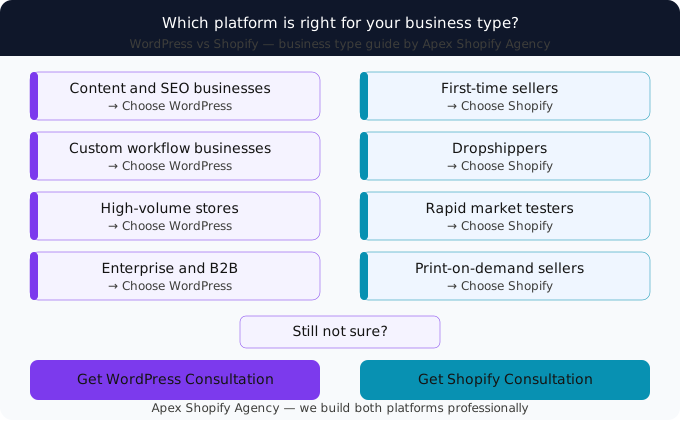
The best way to settle the WordPress vs Shopify debate is matching each platform to your specific business type.
First-Time Sellers Without Technical Background Choose Shopify Zero technical knowledge required. Launch professionally within 24 hours without touching a single line of code.
Content-First Businesses Relying on SEO Choose WordPress Heavy blogging, topic clusters, and advanced schema markup are WordPress’s core strengths. Content-driven stores consistently outrank competitors using WordPress long-term.
Businesses Requiring Custom Workflows Choose WordPress Custom checkout flows, unique pricing models, bespoke integrations, and complex B2B requirements all need WordPress’s unrestricted code access.
Dropshippers and Print-on-Demand Sellers Choose Shopify DSers, Printful, and Oberlo integrate natively with Shopify. Setup takes hours — not weeks. Perfect for testing products fast without technical overhead.
Rapid Launchers Testing Market Demand Choose Shopify Validate your idea within days. Start generating revenue immediately — migrate to WordPress later if custom needs emerge.
Shopify vs WordPress for Small Businesses For small businesses, the WordPress vs Shopify answer depends on one question — do you want to sell fast or build long-term? Budget-conscious small businesses with simple catalogs choose Shopify. Small businesses with content strategies and growth ambitions choose WordPress.
an You Use WordPress and Shopify Together?
Many business owners ask — do you have to choose one in the WordPress vs Shopify debate, or can you use both simultaneously?
The answer is yes — a hybrid setup is absolutely possible and works well for specific business models.
How the Hybrid Setup Works:
- WordPress for content — run your blog, landing pages, and SEO content on WordPress
- Shopify Buy Button — embed Shopify products directly inside WordPress pages
- Subdomain approach — WordPress on yourdomain.com, Shopify store on shop.yourdomain.com
- Custom API integration — connect both platforms through Shopify’s Storefront API
When a Hybrid Setup Makes Sense:
- Your content strategy is a major organic traffic driver
- Your commerce needs fit perfectly within Shopify’s standard features
- You already have an established WordPress site and want to add selling
- You want WordPress’s SEO power combined with Shopify’s checkout reliability
When to Avoid a Hybrid Setup:
- Small teams without developer support
- Limited marketing budget — double maintenance costs money
- Simple stores that do not need advanced content marketing
In the WordPress vs Shopify hybrid approach, analytics, cross-domain tracking, SEO ownership, and design consistency all need careful planning before implementation. When done correctly — it combines the best of both platforms powerfully.
How to Migrate Between Platforms
Switching platforms is a major decision in the WordPress vs Shopify journey — but it is completely achievable when planned correctly. Poor migration destroys SEO rankings, loses customer data, and breaks conversion tracking permanently.
How to Migrate from Shopify to WordPress
- Export all products, customers and orders from Shopify admin
- Install WordPress and WooCommerce on your new hosting
- Use Cart2Cart or LitExtension migration tools for automated data transfer
- Recreate all URL structures and set up 301 redirects immediately
- Migrate meta titles, descriptions and alt texts manually
- Test checkout, payments and shipping before going live
How to Migrate from WordPress to Shopify
- Export WooCommerce products via CSV file
- Import product CSV directly into Shopify admin
- Recreate collections, navigation and payment gateways
- Set up 301 redirects for all changed URLs
- Reconnect email marketing apps and tracking pixels
- Place test orders before launching publicly
What to Check Before Migrating Platforms
Before any WordPress vs Shopify platform migration, always verify:
- All product URLs redirected — zero broken links
- Customer data fully exported and imported
- Google Search Console updated with new sitemap
- Analytics tracking verified and working correctly
- Email marketing flows reconnected and tested
- Page speed tested on new platform before launch
Common Mistakes When Choosing an eCommerce Platform
Avoiding these mistakes in your WordPress vs Shopify decision saves months of wasted time, money, and frustration.
1. Choosing Based on Popularity Just because a competitor uses Shopify does not mean it fits your business. Always evaluate based on your specific requirements — not trends.
2. Ignoring Long-Term Costs Shopify’s $39/month looks affordable until app subscriptions and transaction fees stack up. Always calculate total 3-year cost of ownership before deciding.
3. Underestimating Setup Complexity WordPress beginners consistently underestimate configuration time. Budget 2–4 weeks minimum for a professional WooCommerce store — not 2 days.
4. Neglecting SEO Requirements Migrating platforms after building SEO authority is extremely risky. If organic search drives your growth — choose WordPress from day one.
5. Ignoring Scalability Needs Choose a platform that fits your business in 24 months — not just today. Migrating a large store later is expensive and SEO-damaging.
6. Overlooking Payment Gateway Needs International sellers using third-party gateways pay significant extra fees on Shopify. Always calculate payment processing costs before committing.
7. Skipping Developer Consultation The most expensive WordPress vs Shopify mistake is building on the wrong platform entirely — then paying a developer to migrate everything six months later.
Platform Selection Checklist
Use this checklist to make your final WordPress vs Shopify decision with complete confidence — no guesswork required.
Choose Shopify If You Checked These:
- You want to launch within days — not weeks
- You have zero technical background or coding knowledge
- Your product catalog is straightforward — no complex configurations
- You prefer one monthly bill covering hosting, security and support
- You are testing a new product idea before full investment
- You need dropshipping or print-on-demand integration immediately
- You want 24/7 centralized platform support always available
Choose WordPress If You Checked These:
- Content marketing and SEO are your primary growth strategy
- You need custom checkout flows or unique pricing models
- You process high sales volume — transaction fees matter significantly
- You want complete ownership of your data and platform
- You have developer support or an agency partner available
- You need complex third-party integrations — ERP, CRM, custom APIs
- You want zero recurring app subscription fees long-term
In the WordPress vs Shopify platform selection — if you checked more boxes in Shopify list, go with Shopify. More WordPress boxes checked — WordPress is your platform. Both equal — start with Shopify and migrate when custom needs emerge.
Our WordPress and Shopify Development Services at Apex Shopify Agency
Whichever side of the WordPress vs Shopify debate you land on — Apex Shopify Agency builds and grows both platforms professionally.
Custom Shopify Store Setup and Development Complete Shopify store setup from scratch — account configuration, payment gateways, shipping, apps and full launch support.
WordPress and WooCommerce Development Custom WordPress websites and WooCommerce stores built for speed, SEO, scalability and complete business ownership.
Custom Theme Design and UI/UX Pixel-perfect custom themes designed for both platforms — mobile-first, conversion-optimized and visually stunning.
Branding and Visual Identity Logo design, color palette, brand guidelines and complete visual identity — consistent across every platform and touchpoint.
SEO and Speed Optimization Full technical SEO audit, page speed optimization, keyword strategy and content structure — built for long-term organic growth.
Social Media Management and Paid Ads Complete social media management, content calendar, Meta and Google ad campaigns — driving high-intent buyers to your store consistently.
No matter which side of the WordPress vs Shopify decision you choose — Apex Shopify Agency has the expertise, experience and team to build your store professionally, launch it successfully and grow it consistently.
Why Choose Apex Shopify Agency for Your Store?
In the WordPress vs Shopify decision, choosing the right agency matters just as much as choosing the right platform. Here is why businesses trust Apex Shopify Agency.
We Build on Both Platforms — Shopify and WordPress Unlike agencies that specialize in one platform only — we build professionally on both. You get unbiased platform advice based purely on your business needs.
Conversion-First Design Approach Every design decision we make has one goal — turning visitors into paying customers. Beautiful stores that do not convert are worthless.
Complete Branding — From Logo to Live Store We handle everything — logo, color palette, brand guidelines, theme design and full store launch. One agency, complete brand identity, zero coordination headaches.
Transparent Pricing — No Hidden Costs Clear upfront pricing with zero surprises. You know exactly what you are paying for before we begin a single task.
Dedicated Support After Launch Our relationship never ends at launch. Ongoing support, performance monitoring and growth consultation included for every client always.
Whether your WordPress vs Shopify decision leads you to either platform — Apex Shopify Agency delivers the same standard of excellence, professionalism and results every single time.
Our Store Development Process
At Apex Shopify Agency, we follow a proven five-step process — whether your WordPress vs Shopify decision leads to either platform, our workflow delivers professional results every time.
Step 1 — Discovery and Platform Strategy Session We analyze your business goals, niche, audience and budget — then recommend the right platform confidently based on data, not guesswork.
Step 2 — Branding and Design Prototyping We create your complete brand identity — logo, color palette, typography and full store design prototype — all approved by you before development begins.
Step 3 — Development and Configuration Full store development including theme customization, payment gateways, shipping zones, essential apps or plugins and complete SEO configuration from day one.
Step 4 — Testing and Quality Assurance Every page, link, checkout flow, payment gateway and mobile experience tested thoroughly across all devices and browsers before launch confidently.
Step 5 — Launch and Ongoing Growth Support Your store goes live with full handover, training and documentation included. Post-launch support, performance monitoring and growth consultation continue afterwards.
Regardless of which side of the WordPress vs Shopify decision you choose — our process ensures your store launches professionally, performs excellently and grows consistently from day one.
Our Portfolio — Stores We Have Built
Every store below proves that the WordPress vs Shopify decision matters less than the quality of execution behind it. Here is what Apex Shopify Agency has delivered.
Project 1 — Fashion and Beauty Store Platform: Shopify Challenge: Client needed a fast launch with a visually stunning mobile-first design and seamless checkout experience. Solution: Custom Shopify theme, complete branding, product page optimization and payment gateway setup. Result: Store launched in 7 days — 65% increase in conversions within first month.
Project 2 — Home and Kitchen Store Platform: WordPress + WooCommerce Challenge: Large product catalog requiring advanced filtering, custom collections and SEO-optimized category pages. Solution: Custom WooCommerce development, speed optimization, Rank Math SEO setup and complete branding. Result: Ranked on Google within 45 days — organic traffic doubled within 3 months.
Project 3 — Men Accessories Store Platform: Shopify Challenge: Zero brand identity, no SEO and poor mobile experience killing conversions. Solution: Complete rebranding, custom theme redesign, Google Shopping ads and email marketing automation setup. Result: 3x revenue increase within 60 days of relaunch.
Our portfolio demonstrates that whether the WordPress vs Shopify choice goes either way — Apex Shopify Agency delivers measurable, real results every time.
What Our Clients Say About Apex Shopify Agency
Real businesses trusted Apex Shopify Agency with their WordPress vs Shopify decision — and here is what they experienced.
Client 1 — Hair Salon / London, UK “We had no idea whether to choose WordPress or Shopify for our booking and product store. Apex guided us perfectly and built exactly what we needed. Online sales increased 60% within the first month.” — Sarah Mitchell, London, United Kingdom
Client 2 — Restaurant / New York, USA “Apex built our complete online ordering system from scratch. Their team understood our requirements immediately and delivered beyond expectations. Best investment we made this year.” — James Rodriguez, New York, United States
Client 3 — eCommerce Store / Phoenix, USA “I was completely confused about the WordPress vs Shopify decision for my store. Apex analyzed my business and recommended the perfect platform. We launched in 10 days and hit consistent daily sales within 3 weeks.” — Emily Carter, Phoenix, United States
requently Asked Questions
Is Shopify or WordPress better for SEO in 2026? WordPress wins for advanced SEO — complete URL control, schema markup and content marketing. Shopify ranks well for standard product-focused stores.
What is the biggest difference between WordPress and Shopify? Ownership. Shopify manages hosting, security and updates for you. WordPress gives complete platform ownership but requires self-management.
Is Shopify or WordPress cheaper? Shopify is cheaper short-term. WordPress saves significantly long-term — zero transaction fees and lower recurring costs at high sales volumes.
Can I switch from Shopify to WordPress later? Yes — using migration tools like Cart2Cart. Always set up 301 redirects immediately to protect SEO rankings during transition.
Do I need a developer to use WordPress for eCommerce? Not mandatory — but strongly recommended for a professional store. Basic setups are manageable independently with patience.
Is Shopify good for beginners in 2026? Absolutely. Shopify is the easiest eCommerce platform for beginners — zero technical knowledge required to launch professionally.
Which platform is better for dropshipping in 2026? Shopify wins clearly — native DSers and Oberlo integration makes dropshipping setup extremely fast and simple.
Can I use both Shopify and WordPress together? Yes — WordPress handles content and SEO while Shopify manages checkout through Buy Button or subdomain integration.
Which platform is better for content marketing? WordPress wins decisively — built originally as a blogging platform with unmatched content management capabilities.
Is WordPress or Shopify better for small businesses? In the WordPress vs Shopify small business debate — Shopify wins for fast simple launches. WordPress wins for content-driven long-term growth strategies.
Ready to Build Your Store with Apex Shopify Agency?
You have now seen the complete WordPress vs Shopify comparison — every factor, every cost, every trade-off laid out clearly.
But knowing the right platform and building it professionally are two completely different things.
At Apex Shopify Agency we eliminate that gap entirely.
We analyze your business, recommend the right platform, and build your store from scratch — professionally, fast and at transparent pricing.
What You Get With Apex:
- Free platform consultation — Shopify or WordPress recommendation
- Complete store setup and configuration
- Custom professional theme design
- Full branding and visual identity
- SEO optimization from day one
- Payment gateway and shipping setup
- Email marketing automation
- Ongoing post-launch support
Whether the WordPress vs Shopify decision leads you to either platform — Apex Shopify Agency delivers the same world-class standard of design, development and results every single time.
Do not spend another day guessing which platform is right — let our experts analyze your business and give you a clear, honest recommendation completely free.
Contact Apex Shopify Agency today — get your free platform consultation now.
Your perfect store is one conversation away.
Final Thoughts
The WordPress vs Shopify debate does not have a single universal winner — and it never will.
Both platforms power millions of successful businesses worldwide. Both can generate consistent revenue, rank on Google, and scale to enterprise level. The difference is not which platform is better — it is which platform is better for your specific business.
Choose Shopify when speed, simplicity and managed infrastructure matter more than customization depth.
Choose WordPress when content marketing, complete ownership, advanced SEO and custom development freedom are non-negotiable priorities.
The most expensive mistake in the WordPress vs Shopify decision is not choosing the wrong platform — it is building on the wrong platform without expert guidance, then paying to migrate everything six months later.
That is exactly what Apex Shopify Agency prevents.
We have built stores on both platforms. We understand every strength, every limitation, and every hidden cost. We guide you to the right decision — then execute it perfectly.
Your store deserves more than a template and a tutorial. It deserves a professional team that understands your business, your audience, and your goals.